Decentralized finance gives crypto businesses access to lending, staking, liquidity pools, decentralized exchanges, bridges, and on-chain services. However, it also creates risks that are harder to control than traditional financial products. There may be no named counterparty, no central operator, and no simple way to reverse a transaction.
For risk and legal teams, the challenge is clear: how can the business support DeFi activity without increasing money laundering, sanctions, fraud, smart contract, and regulatory risk?
This checklist gives teams a practical structure to review protocols, assess wallet flows, set monitoring rules, document decisions, and escalate issues early.
Define Your DeFi Risk Appetite
Every DeFi compliance program should start with risk appetite. This means deciding how much DeFi exposure the business is willing to accept and where it will draw the line.
This decision should involve senior leadership, legal, compliance, risk, product, and technology teams. A low-risk business may only allow established protocols with strong liquidity, public documentation, third-party audits, and lower sanctions exposure.
The business should define what is allowed, what needs approval, and what is prohibited.
Create a DeFi Compliance Policy
A DeFi policy turns risk appetite into clear rules. It should explain how the business reviews, approves, monitors, and exits DeFi activity.
The policy should cover approved protocols, permitted assets, prohibited services, wallet screening, smart contract due diligence, sanctions controls, monitoring, escalation, recordkeeping, and reporting obligations.
It should also explain ownership. Legal may review regulatory exposure. Compliance may manage AML, sanctions, and monitoring controls. Risk may assess liquidity and operational risks. Product and engineering may confirm how the protocol will be used in practice.
Appoint a DeFi Compliance Lead
DeFi risk changes quickly. New protocols launch, smart contracts are updated, sanctions lists change, bridges are exploited, and criminal methods evolve. A named DeFi compliance lead helps the business stay coordinated.
This person should maintain the policy, track approved protocols, collect risk assessments, monitor regulatory updates, and make sure issues are escalated. In smaller firms, this may sit with a senior compliance or legal officer.
Conduct a DeFi Risk Assessment
A DeFi risk assessment identifies where the business may be exposed and how serious each risk could be. It should be completed before launching a DeFi-related product, integrating a protocol, supporting a new token, or allowing customers to interact with a DeFi service through the platform.
Key risk areas include counterparty risk, smart contract risk, bridge risk, liquidity risk, governance risk, sanctions risk, money laundering risk, fraud risk, regulatory risk, and reputational risk.
Counterparty risk is different in DeFi because there may be no traditional institution on the other side. Technical risk is also high because smart contract bugs, exploits, or governance attacks can lead to rapid losses. Therefore, the assessment should be reviewed after major updates, hacks, enforcement actions, sanctions events, token changes, or unusual activity.
Map DeFi Transaction Flows
Risk and legal teams need to understand how value moves. This means mapping the flow from the customer, platform wallet, treasury wallet, smart contract, bridge, liquidity pool, decentralized exchange, and final destination.
A flow map should answer practical questions. Where does the crypto come from? Which wallets touch the funds? Which smart contracts are involved? Are mixers, bridges, privacy tools, or high-risk jurisdictions involved?
This mapping helps teams decide what controls are needed. High-risk DeFi deposits may require enhanced review. Treasury interactions may require protocol due diligence. Bridge flows may need extra monitoring.
Use Blockchain Analytics and Wallet Screening
Technology is essential for DeFi compliance. Manual review alone is not enough because DeFi activity can be fast, complex, and spread across many wallets, protocols, and chains.
Blockchain analytics tools can help teams screen wallets, trace funds, identify high-risk exposure, detect links to mixers or sanctioned addresses, and review suspicious transaction patterns. Wallet screening should happen before a wallet is approved and should continue during the relationship because wallet risk can change over time.
Screening should include sanctions exposure, known illicit wallets, scams, ransomware exposure, mixer exposure, bridge exposure, stolen funds, and high-risk clusters. Teams should decide what level of exposure triggers a block, review, rejection, or enhanced due diligence.
Set Monitoring and Escalation Rules
A strong DeFi program needs real-time or near real-time monitoring. Alerts should focus on behavior that creates legal, financial crime, or operational risk.
Useful alert types include large or unusual transactions, rapid movement through multiple protocols, interaction with sanctioned or high-risk wallets, use of mixers or privacy tools, deposits from hacked protocols, repeated bridge activity, circular transactions, wash trading patterns, and sudden changes in customer behavior.
A DeFi reporting procedure should explain who investigates alerts, what evidence must be collected, when the case should be escalated, and when external reporting may be required.
Investigators should document wallet addresses, transaction hashes, risk indicators, customer history, blockchain analytics results, internal notes, and the final decision. The procedure should also explain when to freeze activity, reject a transaction, offboard a customer, escalate to legal counsel, or file a suspicious activity report or local equivalent.
Keep Regulatory Monitoring Active
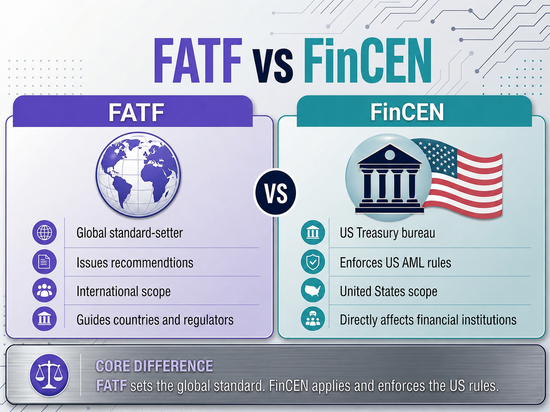
DeFi regulation continues to develop. Risk and legal teams should monitor guidance from global bodies, local regulators, sanctions authorities, and enforcement agencies. This includes FATF, OFAC, FinCEN, the FCA, EU authorities, and other relevant regulators based on where the business operates.
The team should also track enforcement actions, sanctions designations, typology reports, consultation papers, and industry guidance. When expectations change, the DeFi policy and controls should be updated.
Practical Example
A new crypto exchange wants to allow limited DeFi exposure for its treasury and advanced customers. The legal and risk teams set a conservative risk appetite. Only established protocols with strong liquidity, public documentation, third-party audits, and no material sanctions exposure can be considered.
Next, they create a policy covering approved protocols, banned services, due diligence requirements, wallet screening rules, monitoring thresholds, and escalation steps. They appoint a DeFi compliance lead to coordinate approvals.
Before launch, the team completes a risk assessment, maps transaction flows, and integrates blockchain analytics. It screens customer wallets, monitors treasury wallets, and creates alerts for large transactions, mixer exposure, sanctioned wallet links, hacked protocol exposure, and bridge activity.
Conclusion
DeFi compliance works best when it is practical, structured, and connected across teams. A strong checklist should cover governance, policy, ownership, risk assessment, transaction flow mapping, wallet screening, blockchain analytics, monitoring, escalation, reporting, and regulatory tracking.
When these elements work together, the business is better prepared to support DeFi activity while reducing exposure to financial crime, sanctions, legal, technical, and reputational risks.
To build the skills needed to apply this checklist in practice, explore our DeFi AML and On-Chain Risk Monitoring course.
FAQs
What should a DeFi compliance policy include?
It should define approved protocols, permitted assets, due diligence steps, wallet screening, monitoring, escalation, recordkeeping, and reporting responsibilities.
What is a DeFi risk assessment?
It is a structured review of financial crime, sanctions, technical, liquidity, governance, regulatory, and reputational risks linked to DeFi activity.
Why is wallet screening important in DeFi?
Wallet screening helps identify exposure to sanctioned addresses, illicit funds, scams, mixers, ransomware, and stolen assets.
Who should be involved in DeFi compliance?
Legal, compliance, risk, product, operations, technology, and senior leadership should all be involved.