KYC for crypto exchanges is not just about asking customers to upload an ID. It helps exchanges understand who is using the platform, whether the customer presents financial crime risk, and whether their activity makes sense over time.
KYC means Know Your Customer. CDD means Customer Due Diligence. Together, they help exchanges verify identity, assess risk, detect red flags, and support safer onboarding.
For US-facing exchanges, these controls matter because crypto businesses can face money laundering, fraud, sanctions, and regulatory risks. Banks, payment partners, investors, and customers also expect strong controls before they trust a platform.
What Is KYC for Crypto Exchanges?
KYC is the process of identifying and verifying customers. For crypto exchanges, this means collecting information and checking that the person or business is real.
For an individual customer, KYC may include full legal name, date of birth, address, government ID, phone number, email address, and selfie verification. The exchange may also ask for proof of address or source of funds.
For a business customer, the exchange may request company registration documents, beneficial owner details, director information, authorised users, business activity, and expected transaction volume.
Crypto KYC is different from a normal app signup because an exchange account can move value across borders within minutes. Strong KYC helps confirm that customers are not hiding behind fake identities, stolen documents, or mule accounts.
What Is CDD in Crypto Exchange Compliance?
CDD goes beyond identity checks. It helps exchanges understand the risk a customer may bring to the platform. KYC answers, “Who is the customer?” CDD answers, “What risk does this customer present?”
For example, one verified customer may buy $100 of Bitcoin each month, while another may send large stablecoin transfers from several wallets. Although both are verified, they do not carry the same risk.
CDD looks at customer profile, expected activity, source of funds, location, business type, wallet exposure, and other risk factors. As a result, exchanges can rate customers as low, medium, or high risk. When risk is higher, the exchange may apply Enhanced Due Diligence, or EDD.
Why KYC and CDD Matter for Crypto Exchanges
KYC and CDD matter because exchanges need safe onboarding decisions. Without these controls, fake customers, fraud networks, sanctioned users, or money laundering activity may enter too easily.
First, KYC connects accounts to real identities. This matters when teams review suspicious activity, respond to lawful requests, or investigate fraud. Second, CDD helps teams understand whether customer behavior makes sense. If a casual retail investor starts receiving business-like transfers, the profile may need review.
Third, these controls help protect the exchange before harm grows. It is easier to stop a risky account during onboarding than to investigate suspicious flows after funds have moved. Finally, KYC and CDD support a stronger compliance culture across support, onboarding, fraud, compliance, and operations teams.
How KYC Helps Prevent Money Laundering
Crypto can attract money laundering risk because value can move quickly between wallets, exchanges, stablecoins, and fiat rails. Criminals may try to move scam proceeds, ransomware payments, stolen funds, or darknet market funds through weak platforms.
KYC reduces this risk by creating accountability. When customers must verify identity, it becomes harder to use fake accounts at scale. If suspicious activity appears later, analysts can connect transactions back to verified customer information.
However, KYC alone is not enough. A customer may pass identity checks and still use funds from a suspicious wallet. Therefore, exchanges need CDD, transaction monitoring, and wallet screening as well. KYC shows who the customer is, while CDD and wallet screening explain why activity may be risky.
How CDD Helps Exchanges Understand Customer Risk
CDD helps exchanges review the full customer profile, including location, occupation, expected activity, source of funds, products used, and wallet exposure.
Risk ratings matter because not every customer needs the same review. A low-risk customer may only need standard onboarding. A medium-risk customer may need extra checks. A high-risk customer may need EDD before approval.
For example, a verified student expects to buy small amounts of crypto. However, within a week, the account receives $75,000 in stablecoins from unrelated wallets. This does not match the profile, so the exchange may request source of funds information or escalate the case.
CDD also helps teams avoid unfair decisions. Instead of rejecting customers based on one signal, analysts can review the full context and document the reason for their decision.
Why KYC Matters for Sanctions Compliance
Sanctions compliance is a major issue for US-facing crypto exchanges. Sanctioned persons, blocked jurisdictions, and sanctioned wallet addresses can create serious risk.
KYC helps exchanges screen customers by name, date of birth, nationality, address, and location. In crypto, exchanges may also screen wallet addresses and blockchain exposure.
For example, a customer may pass ID verification, but their deposit may come from a wallet with exposure to a sanctioned address. In that case, the exchange may hold the transaction, review blockchain activity, and escalate the case.
CDD supports sanctions reviews because it gives analysts more customer context. However, sanctions screening can create false positives, so trained analysts must compare identifiers carefully before making a decision.
How KYC and CDD Reduce Fraud and Account Abuse
Fraud is one of the biggest reasons exchanges need strong KYC and CDD controls. Bad actors may use stolen IDs, synthetic identities, deepfake selfies, mule accounts, or account takeover tactics.
KYC can block weak or fake identities during onboarding. Document checks, selfie matching, liveness tests, duplicate ID checks, and phone checks can all help reduce fraud.
CDD adds another layer by comparing customer behavior with the customer profile. For example, a customer may claim to be investing personally but repeatedly ask support how to bypass withdrawal limits. Several users opening accounts from the same device and withdrawing to the same wallet may also suggest organised fraud.
The US Compliance Context for Crypto Exchanges
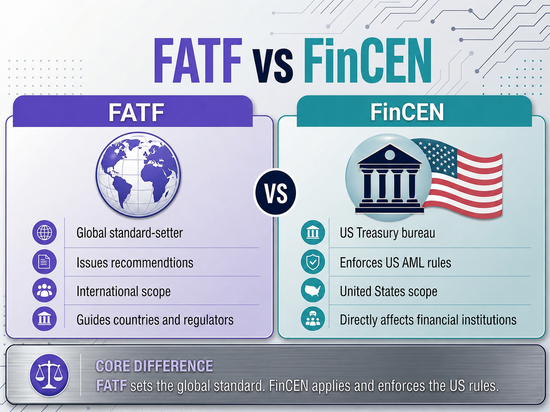
In the US, crypto exchanges may face AML obligations depending on their business model, services, and role in handling convertible virtual currency. FinCEN guidance explains how rules can apply to certain virtual currency exchangers and administrators.
US compliance programs may involve customer identification, AML controls, suspicious activity reporting, recordkeeping, transaction monitoring, and OFAC sanctions risk management.
This article is educational only and is not legal advice. Crypto businesses should seek qualified legal and compliance guidance for their specific obligations.
What Happens When Crypto Exchanges Have Weak KYC?
Weak KYC can expose exchanges to serious problems. It increases financial crime risk because money launderers, scammers, sanctioned actors, and fraud networks may target platforms with weak onboarding.
It can also create regulatory and enforcement risk. Regulators may review whether the exchange had clear policies, trained staff, monitoring systems, records, and escalation procedures.
Weak KYC can damage banking relationships and customer trust. Banks may avoid a platform that cannot show strong customer controls. Users may also leave if they believe a platform allows scams or account abuse.
How KYC and CDD Support Transaction Monitoring
Transaction monitoring is stronger when analysts understand the customer. A transaction that looks normal for one customer may be suspicious for another.
KYC provides identity details. CDD provides the customer profile and risk rating. Transaction monitoring shows what the customer is doing. Together, these controls help analysts ask better questions: Does the transaction match expected activity? Is the source of funds clear? Is wallet exposure risky? Has behavior changed?
Sometimes, transaction activity triggers a KYC refresh. This may happen when an ID expires, an address changes, business ownership changes, transaction volume spikes, or new adverse media appears.
Common KYC and CDD Red Flags
Red flags are warning signs that require closer review. They do not always prove wrongdoing, but they should not be ignored.
Identity red flags include blurry IDs, altered documents, expired IDs, selfie mismatches, and the same document used across multiple accounts. Location red flags include IP address mismatch, VPN use, restricted jurisdiction exposure, or sudden login changes.
Customer profile red flags include unclear source of funds, activity that does not match occupation, inconsistent answers, or signs that the customer is acting for someone else. Wallet and transaction red flags include exposure to mixers, scam-linked wallets, sanctioned addresses, rapid movement of funds, unusual stablecoin flows, or repeated transactions below review limits.
Challenges Exchanges Face With KYC and CDD
KYC and CDD are important, but they are not always easy to manage. Customers expect fast onboarding, while compliance teams need enough time to review documents, risk signals, and red flags.
False positives are another challenge. Screening systems may flag innocent customers because of common names or incomplete data. Therefore, analysts need training and clear procedures.
Data privacy is also a major concern because exchanges collect IDs, addresses, and business documents. Fraud tactics also change quickly. Synthetic identities, deepfakes, AI-generated documents, and cross-chain movement can make risk harder to detect.
Best Practices for Crypto Exchange Compliance Teams
A strong KYC and CDD program should be risk-based. Higher-risk customers should receive stronger checks, while lower-risk customers can follow a simpler process.
Exchanges should connect KYC, CDD, wallet screening, and transaction monitoring. Identity alone is not enough. Wallet risk and behavior data add important crypto-specific context.
Clear records are also essential. Analysts should document why a customer was approved, rejected, restricted, or escalated. Training should include support, product, fraud, onboarding, and compliance teams because each team may spot different risk signals.
CTA Block: Build Practical KYC and CDD Skills
Want to understand how KYC and CDD work inside real crypto exchange environments? Explore the Why KYC and CDD Matter for Crypto Exchanges course.
This course helps learners understand identity verification, customer risk ratings, red flags, onboarding reviews, sanctions screening, wallet risk, and ongoing monitoring in a practical way.
FAQs About KYC for Crypto Exchanges
What is KYC for crypto exchanges?
KYC for crypto exchanges is the process of verifying customer identity and collecting information that helps the exchange understand who is using the platform.
Why do crypto exchanges need KYC?
Crypto exchanges need KYC to reduce money laundering, fraud, sanctions, terrorist financing, and account abuse risks.
What is CDD in crypto?
CDD is the process of assessing customer risk beyond basic identity checks, including profile, expected activity, source of funds, location, and wallet exposure.
Conclusion
KYC and CDD sit at the center of safer crypto exchange operations. KYC helps exchanges verify who customers are. CDD helps teams understand customer risk, expected activity, and whether behavior makes sense over time.
For US-facing exchanges, these controls support AML, sanctions compliance, fraud prevention, transaction monitoring, banking relationships, and customer trust. They must be practical, risk-based, and supported by trained staff.
Crypto moves fast, and customer risk can change quickly. Therefore, exchanges need more than one-time ID checks. They need connected processes that bring together onboarding, customer due diligence, wallet screening, transaction monitoring, and escalation.
Final CTA: Start Learning KYC and CDD Today
If you want to understand KYC for crypto exchanges in a practical, beginner-friendly way, the Why KYC and CDD Matter for Crypto Exchanges course is designed for you.
Start the course today and build practical KYC and CDD skills for crypto exchange compliance.