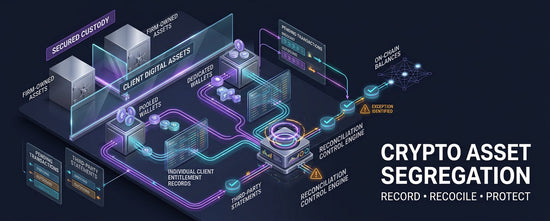
Cryptocurrency businesses must monitor value moving rapidly across wallets, blockchains, exchanges, bridges and decentralised services. A transaction may appear ordinary alone but become suspicious when connected with customer behaviour, source of funds, counterparties and the wider wallet network.
This is why AI AML transaction monitoring is becoming an important part of modern financial crime controls. Machine learning can analyse large volumes of on-chain and off-chain information, recognise behavioural changes, identify connected activity and help investigators prioritise the alerts most likely to require attention.
AI does not remove the need for rules, trained analysts or regulatory judgement. Strong crypto AML monitoring combines clear scenarios with behavioural models, blockchain analytics and human investigation. This article explains how that approach strengthens suspicious activity detection while reducing unnecessary alert volume.
This monitoring topic sits within the wider AI in crypto compliance framework, where AML, fraud detection, sanctions screening and blockchain risk monitoring need to support the same risk-based programme.
Why Traditional Rule-Based Monitoring Is Not Enough
Traditional monitoring uses predefined rules and thresholds. A system may generate an alert when a transfer exceeds a set amount, a customer makes several rapid withdrawals or a wallet interacts with a known high-risk service.
These controls remain valuable because they are understandable and testable. FATF’s virtual-asset red flags include unusual transaction patterns, activity with no logical explanation, anonymity-enhancing services, geographic risk and concerns about the sender, recipient or source of funds.
However, fixed rules have weaknesses. Criminals can split value into smaller transfers, change addresses, vary timing or combine services to avoid a threshold. Rules may also generate many alerts for legitimate customers whose activity matches a basic scenario.
A threshold cannot always distinguish between a frequent trader, a treasury operation and a criminal layering funds. Similar transactions can carry very different context.
The FCA recognises that more sophisticated monitoring can take a rounded view of customer behaviour and broader networks. Its guidance also warns against poorly calibrated rule-driven systems and encourages firms to consider network analysis or machine learning while managing explainability and audit risks.
Rule-Based Monitoring Versus AI Monitoring
Rule-based monitoring asks whether a transaction meets a predefined condition. AI suspicious transaction detection asks whether activity is unusual, connected to known risk or inconsistent with expected behaviour.
For example, a rule may flag every withdrawal above $10,000. A machine-learning model may assess the withdrawal alongside the customer’s history, account age, funding source, destination wallet, transaction velocity and exposure to risky services.
The two approaches should work together. Rules cover known typologies and clearly defined risks; AI finds combinations, relationships and behavioural changes that are harder to express as fixed conditions.

Behavioural Analysis: Understanding What Is Normal
Behavioural analysis is one of the most useful applications of machine learning AML. Instead of comparing every customer with one standard, a model can establish an expected pattern for an individual or peer group.
The baseline may include:
-
Typical transaction amounts and frequency
-
Common assets, networks and counterparties
-
Usual deposit-to-withdrawal timing
-
Device and location information
-
Expected activity based on the customer profile
An alert may be generated when activity changes materially. A customer who normally makes small monthly purchases may suddenly receive funds from several wallets, exchange them for a stablecoin, bridge the value to another network and withdraw immediately.
No single action proves money laundering. The concern comes from the combination of behavioural change, transaction speed, wallet exposure and inconsistency with the customer profile. AI helps bring those factors together for investigation.
Detecting Unusual Wallet Activity
When unusual wallet behaviour points to scams or account compromise, the AI crypto fraud detection guide explains how those signals can be investigated without treating every alert as proof of wrongdoing.
Blockchain monitoring can examine the origin and destination of funds, exposure to attributed services, transaction paths and relationships between addresses.
AI and graph analytics can identify patterns such as:
Rapid movement: Assets are deposited and withdrawn with little apparent economic purpose.
Structuring: Value is divided among multiple addresses before being recombined.
Layering: Funds move through repeated swaps, intermediary wallets or bridges.
Risk exposure: A wallet has direct or meaningful indirect links to scams, ransomware, stolen funds, darknet markets or sanctioned entities.
Peel chains: Repeated transfers send smaller portions to new addresses while the remaining balance continues through the chain.
Linked networks: Separate customer accounts share devices, funding sources or destination-wallet clusters.
Context remains essential. A remote link several hops away is not equivalent to receiving funds directly from an illicit address. Wallet attribution can also be incomplete or probabilistic. AI may highlight a relationship, but an investigator must assess its strength, value, direction, timing and relevance.
FATF’s July 2026 update identifies increasingly complex virtual-asset risks involving organised fraud, stablecoins, unhosted wallets, offshore providers and DeFi. These developments increase the importance of multi-source and network-based monitoring.
Reducing False Positives Without Hiding Risk
False positives occur when monitoring generates alerts for activity that is not ultimately suspicious. Excessive false positives consume analyst time, create backlogs and can delay urgent cases.
AI can reduce false positives by adding context. Rather than alerting only because a transaction exceeds a threshold, a model can consider whether the amount fits the customer’s history, whether the counterparty is known and whether other risk indicators are present.
Machine learning can also rank alerts. Cases involving sudden behavioural change, high-confidence illicit exposure and rapid cross-chain movement may receive higher priority than cases with one weak indicator.
However, reducing alert volume is not automatically an improvement. A model that suppresses too many alerts may create false negatives. Firms should sample lower-scored activity, review missed incidents and compare results with known typologies to confirm that efficiency has not weakened detection.
Dynamic AML Risk Scoring
For the technical foundation behind wallet clustering and changing risk scores, see our machine learning blockchain analytics guide. It covers attribution confidence, cross-chain movement and continuous risk monitoring.
AI-based risk scoring combines indicators into a score or category that changes as new information appears. Inputs may include customer risk, transaction behaviour, wallet exposure, geography, account-security signals and previous investigations.
A score may increase when:
-
Activity becomes inconsistent with the customer profile
-
Funds arrive from newly attributed high-risk wallets
-
Several customer accounts appear connected
-
The customer uses multiple bridges or privacy-enhancing services
-
A wallet receives a new illicit-service attribution
-
The customer provides unclear or contradictory explanations
Good risk scoring should show the main reasons behind the result. A score without supporting factors is difficult to investigate or defend. It must also remain a decision-support tool rather than proof of criminal activity.
Risk scores should be reviewed as customer circumstances and external intelligence change. A customer who was considered low risk during onboarding may become higher risk because of new transactional behaviour, geographic exposure or connections to newly identified wallet clusters.
Improving Suspicious Activity Investigations
Once an alert is generated, AI can support the investigation rather than merely producing another score. It may:
-
Collect relevant customer, transaction and wallet information.
-
Map fund flows across addresses and blockchains.
-
Identify connected accounts, devices or counterparties.
-
Compare activity with the expected customer profile.
-
Highlight risk indicators and missing evidence.
-
Prepare a case summary or draft narrative.
This can reduce investigation time and improve consistency.
For example, an investigator may receive an alert involving a customer who deposited assets from several external wallets. An AI-assisted system could map the source wallets, identify shared counterparties, detect interaction with a high-risk service and compare the activity with the customer’s stated source of funds.
The analyst could then determine whether additional information is required, whether the customer’s explanation is credible and whether the activity should be escalated.
Analysts must still verify every material fact. Generated summaries may misunderstand transaction direction, confuse wallet ownership or describe uncertain attribution too confidently. AI-generated narratives should be treated as drafts, not final suspicious activity reports.

An AI-Assisted Compliance Workflow
A practical AI-assisted compliance workflow can follow six stages.
1. Data Collection
The system combines customer due diligence, account activity, fiat transactions, blockchain data, device signals, sanctions information and previous case outcomes.
Using both on-chain and off-chain information is important. Blockchain data may show where funds moved, while customer and device data help explain who initiated the activity and whether it fits the expected relationship.
2. Detection
Rules identify known scenarios while behavioural, anomaly and network models search for less obvious patterns.
A rule might identify direct interaction with a prohibited wallet. An anomaly model may identify an unexpected change in the customer’s transaction volume. Network analysis may reveal that several apparently unrelated accounts are sending funds to the same wallet cluster.
3. Prioritisation
Alerts are ranked using the strength, combination and urgency of risk indicators.
Prioritisation helps investigators focus first on cases that may involve active fraud, direct sanctions exposure, stolen funds or rapid movement through several networks.
4. Investigation
Analysts review customer context, wallet paths, related entities and explanations. AI organises evidence but does not replace judgement.
The investigation should separate confirmed facts from assumptions and probabilistic blockchain attributions.
5. Decision and Escalation
The investigator decides whether to close, monitor, restrict, request information or escalate the case for suspicious activity reporting.
The decision and its rationale should be documented clearly, including any reasons for disagreeing with the system’s recommendation.
6. Feedback and Validation
Teams review outcomes, test performance, sample suppressed alerts and document changes to rules or models.
Confirmed cases can help improve future detection, but historical analyst decisions should not automatically become training data. Poor or inconsistent previous decisions could teach the model to repeat the same weaknesses.
For UK cryptoasset registration, the FCA expects firms to configure on-chain and off-chain monitoring tools, submit their rules and thresholds, show how they detect high-risk activity and explain how third-party systems meet the firm’s needs.
Governance and Limitations
AI creates value only when supported by governance. Risks include poor data quality, model drift, unclear decisions, overreliance on vendor labels and automation bias.
Firms should define each model’s purpose, document data and assumptions, test performance, monitor false positives and false negatives, retain configuration histories and require meaningful human review.
Analysts should understand enough to challenge the system. They should know which information affects a risk score, how wallet exposure is calculated and where the model may produce unreliable results.
Firms should also maintain fallback procedures for system outages, missing data feeds or vendor failures. Compliance activity should not stop because one automated tool becomes unavailable.
Frequently Asked Questions
What Is AI AML Transaction Monitoring?
AI AML transaction monitoring uses machine learning, behavioural analytics and network analysis to identify activity that may indicate money laundering or another financial crime.
How Does AI Improve Suspicious Transaction Detection?
AI analyses combinations of events rather than relying only on fixed thresholds. It can recognise behavioural changes, connected wallets, unusual transaction sequences and patterns similar to previous suspicious cases.
Does AI Replace Rule-Based Crypto AML Monitoring?
No. Rules remain important for known typologies, legal requirements and clearly defined scenarios.
Can AI Reduce AML False Positives?
AI can reduce false positives by adding customer and transaction context and prioritising alerts with stronger combinations of risk.
What Unusual Wallet Activity Can AI Detect?
AI may identify rapid fund movement, structuring, peel chains, cross-chain layering, connections to high-risk services and networks of accounts using shared wallets or devices.
How Is Machine Learning Used in AML Risk Scoring?
Machine learning combines factors such as customer profile, transaction behaviour, wallet exposure, geography and account-security signals.
Can AI Write a Suspicious Activity Report?
AI can organise evidence, summarise findings and prepare a draft narrative. However, a trained professional must verify the facts, determine whether reporting requirements are met and approve the final report.
What Is the Biggest Limitation of AI in Crypto AML?
AI output depends heavily on data quality and model design. Incomplete wallet attribution, weak training data or poor calibration can produce misleading results.
Conclusion
AI improves crypto AML monitoring by adding behavioural, network and contextual analysis to traditional transaction rules. It can identify unusual wallet activity, prioritise stronger alerts, reduce unnecessary reviews and help analysts investigate suspicious activity more efficiently.
If you want to turn these ideas into practical controls, explore the AI in Crypto Compliance: AML, Fraud Detection and Blockchain Risk Monitoring course. It is designed for teams that need to apply AI to AML monitoring, fraud detection, sanctions screening and blockchain risk investigation with strong governance and human oversight.