Crypto token red flags are facts or patterns that suggest more investigation is needed. Examples include unverifiable teams, extreme holder concentration, removable liquidity, hidden contract powers, unrealistic promises and unexplained wallet activity.
A red flag does not automatically prove that a project is fraudulent or unsuitable. Some warning signs have legitimate explanations. The right response is to verify the evidence, consider context and examine whether several risks connect.
This article is educational and does not identify any specific project as fraudulent or recommend an investment decision.
1. An Anonymous or Unverifiable Team
Pseudonymous teams have contributed to genuine open-source projects. However, anonymity limits background checks, accountability and legal recourse.
Investigate when:
-
names or biographies cannot be confirmed;
-
profile photographs appear copied or generated;
-
employment and education claims lack independent support;
-
advisers do not acknowledge the relationship; or
-
control rests with unidentified individuals.
How to verify: Cross-check company registers, code contributions, public presentations, previous employers and acknowledgement from claimed partners.
2. Unclear Legal Entity or Ownership
Users should be able to understand who issues the token, runs the service, controls the treasury and maintains the code.
Warning signs: conflicting company names, recently created entities presented as long-established, no operating jurisdiction, nominee structures with no explanation or terms that do not identify a contracting party.
How to verify: Search official registers and compare legal names, addresses, directors and ownership with the project’s documents.
3. Vague or Changing Token Utility
A token may be described as essential even though the product can function without it. The stated use may also change after fundraising.
Warning signs: utility explained mainly through future price, many unrelated purposes, no working integration or a roadmap that repeatedly replaces the core use case.
How to verify: Use the product, read technical documentation and identify the exact action for which the token is required.
4. Extreme Holder Concentration
If a small number of wallets hold most transferable supply, they may influence price, liquidity or governance.
Warning signs: one or two unexplained wallets dominate holdings, related wallets appear separated in public charts, or project-controlled balances are omitted from concentration claims.
How to verify: Review the explorer, label known exchange, bridge, burn and contract wallets, and trace funding relationships where appropriate.
5. Excessive or Hidden Insider Allocation
Large allocations to founders, team members or early investors can create unequal incentives and future selling pressure.
Warning signs: allocation totals do not add up, insiders are grouped into vague categories, or public material excludes options, warrants or future claims.
How to verify: Compare the white paper, sale documents, vesting contracts, treasury wallets and on-chain distribution.
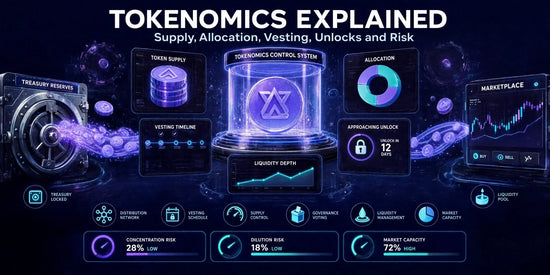
6. Large Upcoming Token Unlocks
Unlocks make restricted tokens transferable. They do not guarantee selling, but they may increase supply and change governance power.
Warning signs: a large share of current circulation unlocks at once, the schedule is difficult to find, or tokens move before the published date.
How to verify: Check vesting contracts and multiple reputable calendars, then calculate the unlock as a percentage of circulating supply—not only total supply.
7. Unclear or Unlimited Minting
A mint function can support rewards or expansion, but it can also dilute holders.
Warning signs: no maximum supply despite fixed-supply marketing, one wallet can mint without limits, or minting events lack notice and governance.
How to verify: Inspect verified contract functions, current owner, role permissions and historical mint transactions.
8. Low or Removable Liquidity
A displayed price means little if users cannot trade near it.
Warning signs: tiny pool reserves, wide spreads, most liquidity provided by the project, unlocked liquidity-provider positions or a sharp gap between claimed volume and executable depth.
How to verify: Estimate slippage at several trade sizes and identify who controls liquidity. “Locked” should be checked on-chain, including duration and release conditions.
9. Suspicious Trading Activity
Artificial activity can create the appearance of demand.
Warning signs: repetitive transactions of identical size, sudden volume without news or depth, price spikes during coordinated campaigns, or most trading on obscure venues.
How to verify: Compare time series across venues, order-book depth, wallet patterns and independent market data. Patterns are indicators, not proof by themselves.
10. Unverified or Mismatched Smart Contracts
Unverified source code prevents easy comparison between deployed code and public claims.
Warning signs: several contract addresses circulate, website and explorer links disagree, or an audit covers an address different from the live token.
How to verify: Confirm the network and address from multiple official sources, then match deployed code and audit scope.
11. Dangerous Administrative Permissions
Token contracts may allow owners to pause transfers, blacklist wallets, change fees, mint supply or upgrade logic.
These functions can be legitimate. The red flag is hidden, unlimited or weakly controlled power.
How to verify: Identify every privileged role, current holder, multisignature threshold, time lock and change history. Test whether claims such as “ownership renounced” apply to all relevant contracts. 
12. Transfer Restrictions or Honeypot-Like Behaviour
Some malicious or badly designed tokens allow buying but block or heavily penalise selling.
Warning signs: changing transfer taxes, wallet-specific restrictions, hidden allowlists, users reporting failed sells or administrator-controlled exemptions.
How to verify: Review code and reputable contract-analysis tools. Small test transactions still carry risk and should not replace analysis.
13. Audit Claims Without Evidence
An audit badge is not enough.
Warning signs: no full report, unnamed auditor, unresolved critical findings, audit performed on old code or a project claiming “100% secure”.
How to verify: Obtain the report from the auditor where possible. Compare the commit, address, scope and remediation with the deployed version.
14. Lack of Transparency or Conflicting Documents
Important figures should be consistent across the white paper, website, terms, explorer and announcements.
Warning signs: different supply totals, unexplained treasury transfers, deleted documents, missing change logs or repeated refusal to answer factual questions.
How to verify: Save dated copies, compare versions and ask narrow questions that can be answered with evidence.
15. Unrealistic Promises and Aggressive Marketing
Claims of guaranteed returns, no risk or inevitable exchange listings should be treated cautiously.
Warning signs: countdown pressure, referral rewards presented as investment evidence, celebrity promotion without clear disclosure, criticism framed as disloyalty and price claims dominating product discussion.
How to verify: Separate factual product claims from opinions and confirm partnerships, licences and listing announcements at their source.
16. Regulatory or Sanctions Concerns
Tokens and services can face different rules across jurisdictions. Sanctions may apply to people, entities, jurisdictions or addresses.
Warning signs: a project claims worldwide legality, ignores geographic restrictions, misrepresents registration as product approval, or has material unexplained links to designated actors.
How to verify: Use current official registers, sanctions lists and dated jurisdiction-specific analysis. Do not infer guilt from indirect wallet exposure without context.
17. Previous Security Incidents With Poor Response
An incident does not automatically disqualify a project. The response can reveal more than the event.
Warning signs: delayed disclosure, changing explanations, no post-mortem, no remediation evidence, users blamed without investigation or the same control failing repeatedly.
How to verify: Review on-chain events, technical post-mortems, audit updates and whether promised controls were implemented.
18. Weak or Concentrated Governance
Governance may be captured even when voting is public.
Warning signs: one party has effective control, quorum is routinely missed, administrators can bypass votes, treasury spending is opaque or emergency powers have no time limit.
How to verify: Examine proposals, turnout, delegation, implementation keys, multisignature signers and treasury transactions.
How to Interpret Red Flags
Use three questions:
-
Is the indicator verified? A social post or anonymous accusation is not enough.
-
Is there a reasonable explanation and evidence? For example, a large wallet may be a bridge contract rather than one investor.
-
How does it connect to other risks? Concentration becomes more serious when liquidity is thin and an unlock is close.

A simple escalation scale
| Level | Meaning | Response |
|---|---|---|
| Observation | unusual fact with limited impact | record and monitor |
| Concern | credible issue needing explanation | obtain evidence and widen review |
| Major concern | high likelihood or severe impact | pause decision and seek specialist analysis |
| Critical | confirmed prohibition, exploit or uncontrolled harm | avoid interaction or activate formal escalation controls |
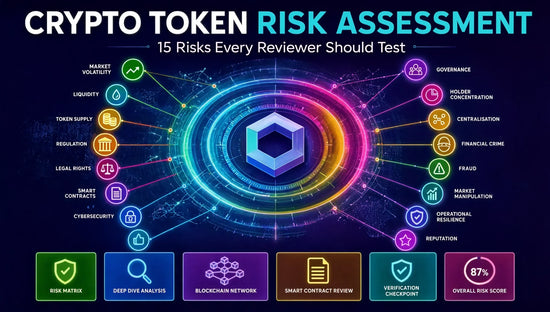
For a full scoring method, use the crypto token risk assessment framework.

When Several Red Flags Appear Together
Connected warning signs deserve more weight than a simple count. Imagine a fictional token with an anonymous team, 70% of circulating supply in five wallets, project-controlled liquidity and a contract owner who can change transfer fees. None of those facts alone proves misconduct. Together, they describe a system in which unidentified controllers may influence supply, trading conditions and whether users can transfer the asset.
The next step is not to publish an accusation. It is to test specific explanations:
-
Are the large wallets exchanges, bridges, vesting contracts or beneficially related holders?
-
Is liquidity ownership disclosed, locked and protected by clear conditions?
-
Are fee changes limited, time-delayed and approved by a multisignature?
-
Can the team demonstrate delivery and accountability without revealing personal identities publicly?
-
Do published tokenomics match on-chain balances and movements?
If reliable evidence resolves the issues, record it. If important controls remain unverifiable, uncertainty itself belongs in the risk assessment. In a professional listing process, a reviewer may defer the decision, require remediation or escalate the matter to specialists. For an individual researcher, the responsible response may be to avoid acting until the facts are clearer.
Frequently Asked Questions
What are crypto token red flags?
They are warning signs—such as hidden control, concentrated supply, weak liquidity or false claims—that indicate further investigation may be warranted.
Does one red flag mean a token is a scam?
No. A red flag is not proof. Verify the fact, consider legitimate explanations and assess whether it connects with other warning signs.
How can I check token holder concentration?
Use a blockchain explorer or reputable analytics service. Correctly label exchange, bridge, burn and contract wallets before judging concentration.
Why is unlocked liquidity a concern?
If one party can withdraw most liquidity, users may be unable to sell without extreme slippage. Verify who controls liquidity-provider positions and when locks expire.
Are anonymous crypto developers always dangerous?
Not necessarily. However, anonymity reduces background verification and accountability, so technical, governance and treasury controls deserve stronger scrutiny.
What smart-contract permissions should I check?
Look for minting, pausing, blacklisting, fee changes, upgradeability and fund-transfer powers. Identify who controls each permission and what safeguards apply.
Where should I verify regulatory and sanctions information?
Use current official regulator registers, legislation and sanctions lists relevant to the people, entities, activities and jurisdictions involved.
Conclusion
The most useful red flags are specific and verifiable. Do not treat uncertainty as guilt, but do not let popularity replace evidence. Check who controls the token, how supply and liquidity work, whether code matches claims and whether the project responds transparently to legitimate questions.
Next, use the complete guide on how to research a crypto token or return to the token listing due diligence framework.
Explore how listing teams document, score and monitor these warning signs in the Token Listing Due Diligence and Cryptoasset Risk Assessment course.