To research a crypto token, verify its contract address, purpose, team, documentation, supply, distribution, liquidity, smart-contract controls, security record, governance and legal context. Compare claims with independent evidence and record what you cannot verify. A checklist helps you avoid making a decision based only on price, popularity or social-media promotion.
This process cannot tell you whether a token will rise in value. It can help you understand what you are interacting with, identify unanswered questions and decide whether more investigation is needed.
This guide is general education, not a recommendation to buy, sell or hold any cryptoasset. Cryptoassets can lose some or all of their value.
Start With the Correct Token

Scammers can copy a project’s name, symbol, branding and website. Therefore, your first task is to identify the exact asset.
Record:
-
the blockchain network;
-
the contract address;
-
the official project website;
-
the official documentation and source-code links;
-
reputable explorer links; and
-
the markets or liquidity pools where it trades.
Obtain the contract address from more than one reliable source. A token symbol is not unique. Two unrelated assets may use the same ticker, and fake tokens may imitate a recognised project.
1. Understand the Project and Its Purpose
Write a one-sentence explanation of the project without copying its marketing. What problem does it claim to solve? Who uses it? What happens today, rather than only on the roadmap?
Ask:
-
Is there a working product or only a concept?
-
Is blockchain necessary for the stated use?
-
Who are the intended users?
-
What evidence shows real activity?
-
Which competitors solve the same problem?
-
What must go right for the project to remain useful?
If you cannot explain the project simply after reading its documentation, either the material is unclear or you need more research.
2. Verify the Team, Entity and Ownership
Look for the legal entity, place of registration, founders, directors, important developers, advisers and beneficial owners where disclosed.
Cross-check professional histories with company registers, previous employers, reputable reporting and published code contributions. Treat profiles and follower counts as starting points, not proof.
An anonymous or pseudonymous team is a risk factor, not automatic evidence of fraud. It reduces the information available to test experience, conflicts and accountability. Record that limitation instead of forcing a conclusion.
Questions to ask include:
-
Can the team members be independently verified?
-
Have they built or operated relevant products before?
-
Are claimed advisers acknowledged by those people?
-
Who controls the issuer, treasury and smart contract?
-
Are there undisclosed relationships among the team, investors and market makers?
-
Is there material adverse legal or regulatory history?
3. Read the White Paper Critically
A white paper should explain the problem, system, token, supply, allocation, governance, technical design, risks and roadmap. However, it is written by the project and should not be treated as independent assurance.
Look for:
-
clear definitions rather than promotional language;
-
consistent supply and allocation figures;
-
named assumptions and limitations;
-
realistic milestones;
-
explanations of administrator powers;
-
risk disclosures;
-
citations for market claims; and
-
version and update dates.
Compare the white paper with the website, contract and current product. If the document promises a fixed supply but the contract permits unrestricted minting, the deployed code matters more than the promise.
4. Test the Token’s Utility
Token utility means the function the token performs within its ecosystem. It may be used for fees, access, staking, collateral, voting, rewards or settlement.
Ask whether the token is genuinely required. Could the product operate without it? Does usage create demand, or does demand depend mainly on new buyers? Are rewards funded by productive activity, token inflation or both?
Utility does not guarantee value. A token can be useful but overvalued, legally restricted, insecure or poorly distributed. It is one part of the overall assessment.
5. Analyse Supply and Distribution
Record maximum supply, total supply and circulating supply. Then check how tokens are divided among the team, early investors, treasury, ecosystem, community and other groups.
Key questions
-
What percentage currently circulates?
-
Can more tokens be minted?
-
Who holds the largest wallets?
-
Are related wallets reported separately even though one party controls them?
-
How much is allocated to insiders?
-
Are allocations locked on-chain or supported only by a promise?
-
When do cliffs and unlocks occur?
-
How are staking rewards funded?
Market capitalisation usually uses circulating supply, while fully diluted valuation considers the price across the eventual or maximum supply. A large gap may indicate future dilution, although the timing and mechanism matter. 
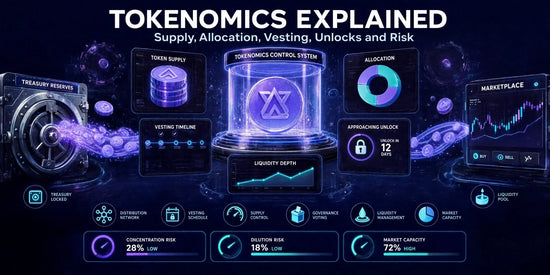
Read Tokenomics Explained: How Supply, Distribution and Unlocks Affect Crypto Risk for a deeper walkthrough.
6. Check Holders, Vesting and Token Unlocks
Use a block explorer or reputable analytics service to review major holders. Exclude known burn addresses, exchange custody wallets, bridges and protocol contracts only when you can verify their role.
Concentration can create several risks:
-
one holder can sell enough to disrupt the market;
-
a few parties may control governance;
-
apparent distribution may be split across related wallets; and
-
insiders may influence liquidity or price.
Next, compare vesting schedules with on-chain movements. Record upcoming cliffs and unlocks. An unlock does not mean the recipients will sell, but it increases transferable supply and may change incentives.
7. Evaluate Liquidity and Trading Quality
Trading volume alone is not enough. Check:
-
order-book depth or liquidity-pool reserves;
-
bid–ask spreads;
-
slippage for realistic trade sizes;
-
number and quality of venues;
-
concentration of volume;
-
consistency across days;
-
who controls liquidity-provider positions; and
-
whether liquidity is locked, for how long and under what conditions.
A token may show high reported volume while having shallow executable liquidity. For decentralised pools, review both sides of the pool and whether a small number of wallets can withdraw most liquidity. 
8. Inspect the Smart Contract
You do not need to be a developer to check basic facts.
Confirm whether:
-
the contract source is verified;
-
the address matches official documentation;
-
ownership has been renounced, retained or transferred to a controlled multisignature;
-
administrators can mint, pause, blacklist, upgrade or change fees;
-
transfer taxes or anti-sell functions exist;
-
a proxy can point to new logic;
-
privileged keys are protected; and
-
the token depends on bridges, price oracles or other contracts.
Administrative powers may have legitimate uses, such as emergency response. The issue is transparency, scope and control. A unilateral power held by one unprotected wallet presents a different risk from a time-delayed change approved by several independent signers. 
9. Review Security Audits and Incidents
Find the full audit report, not just a logo. Check the auditor, scope, contract version, date, findings and whether fixes were independently confirmed.
Ask:
-
Was the deployed contract actually audited?
-
Did the audit cover bridges, staking or governance modules?
-
Were high-severity issues resolved?
-
Has the code changed since the review?
-
Is there a bug bounty?
-
Has the project disclosed previous exploits and recovery actions?
An audit reduces information gaps; it does not eliminate smart-contract risk.
10. Review Governance and Treasury Control
Understand who can propose, approve and implement changes. Inspect voting thresholds, quorum, delegation, time locks, emergency powers and treasury controls.
For decentralised governance, check turnout and voting concentration. A system may appear open while a founder, venture investor or delegated bloc can determine most outcomes.
Also review the treasury. Which assets does it hold? Who can transfer them? Are spending decisions published? Is the project dependent on continuously selling its own token to fund operations?
11. Consider Regulatory and Financial-Crime Risk
The treatment of a token can differ by jurisdiction. Look for credible, scoped legal analysis and clear geographic restrictions. Do not assume that an exchange listing, company registration or AML registration means a regulator has approved the token.
Consider whether the project, key people, wallets or fundraising show:
-
sanctions exposure;
-
links to theft, ransomware, fraud or darknet services;
-
unexplained use of mixers or chain-hopping;
-
misleading promotions;
-
opaque fundraising flows; or
-
restrictions that the project does not appear to follow.
These are investigation points. On-chain proximity to a risky service is not proof that a project committed a crime.
12. Check Community and Marketing Claims
Communities can reveal product problems and governance disputes, but popularity is easily manipulated.
Be cautious of:
-
guaranteed or “risk-free” return claims;
-
pressure to buy before a deadline;
-
criticism being deleted rather than answered;
-
engagement that appears automated;
-
undisclosed paid promotions;
-
announcements that cannot be confirmed by the named partner; and
-
price discussion overwhelming product information.
Search for independent discussion and read critical as well as supportive views. Then verify factual claims at their original source.
A Practical Crypto Token Due Diligence Checklist
| Area | Check | Evidence to save |
|---|---|---|
| Identity | correct network and contract | official page plus explorer |
| Project | working product and clear purpose | product, documentation, usage evidence |
| People | verifiable team and entity | registers and independent profiles |
| Utility | token has a defined function | technical and product documentation |
| Supply | supply and minting rules are clear | contract and explorer data |
| Distribution | allocations and concentration understood | allocation table and holder analysis |
| Unlocks | vesting dates and amounts recorded | vesting contract or published schedule |
| Market | liquidity and volume are executable | depth, spreads, pools and venues |
| Technology | privileges and dependencies identified | verified code and architecture |
| Security | audit scope and incidents reviewed | full reports and remediation evidence |
| Governance | decision and treasury control understood | voting and multisignature records |
| Legal | jurisdictional limits identified | dated, scoped analysis |
| Financial crime | material exposure investigated | screening and contextual analysis |
| Marketing | important claims independently confirmed | source links and archived disclosures |
Use a Research Log
For each finding, record the source, date, conclusion, uncertainty and follow-up question. Mark information as:
-
verified: supported by reliable primary evidence;
-
claimed: stated by the project but not independently confirmed;
-
inferred: a reasonable conclusion from available facts; or
-
unknown: evidence is missing or contradictory.
This simple distinction prevents a confident marketing claim from becoming an assumed fact.
Frequently Asked Questions
How do I research a crypto token before buying?
Start with the correct contract address. Then review the project, team, utility, supply, holders, unlocks, liquidity, code, audits, governance, legal context and material financial-crime or fraud indicators.
Where can I check who holds a token?
Use the relevant blockchain’s explorer or a reputable analytics platform. Label known exchange, bridge, burn and contract addresses carefully before interpreting concentration.
What should I look for in a crypto white paper?
Look for a clear product, token function, technical design, supply and allocation, governance, roadmap, risks and consistent figures. Compare statements with deployed code and current evidence.
Does a security audit make a token safe?
No. An audit covers a defined scope at a point in time. It may miss vulnerabilities and does not assess every market, legal, governance or economic risk.
Why do token unlocks matter?
Unlocks make previously restricted tokens transferable. They may increase circulating supply, change voting power and create selling pressure, although recipients do not necessarily sell.
Is an anonymous crypto team always a scam?
No. Anonymity is not proof of fraud, but it limits verification and accountability. Treat it as a risk factor and examine governance, code, treasury controls and delivery evidence more closely.
What is the biggest crypto-token red flag?
There is no universal single red flag. Unverifiable control, hidden minting powers, concentrated supply, removable liquidity and false claims can each be serious. Multiple connected warning signs matter most.
Conclusion
Good token research replaces excitement with a repeatable process. Verify the exact asset, compare claims with evidence, understand who controls the system and examine supply, liquidity, code, governance and legal context together. Record unknowns instead of guessing.
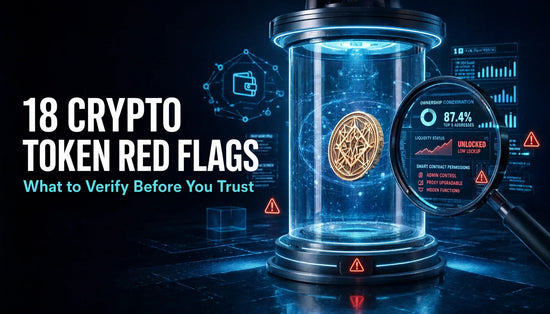
For a faster warning-sign review, use the guide to crypto token red flags. To understand how professional platforms approach admission, read the token listing due diligence pillar.
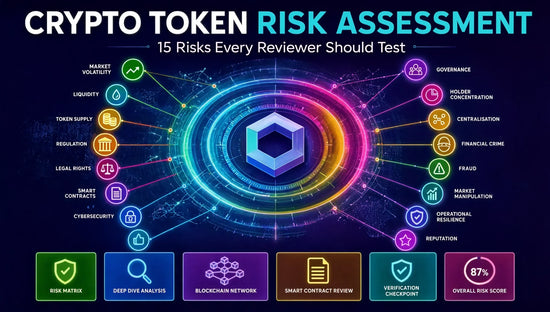
If you want to move from personal research to a structured listing framework, explore Crypto Compliance Academy’s Token Listing Due Diligence and Cryptoasset Risk Assessment course.